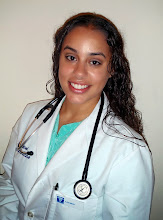
“Life is not easy for any of us. But what of that? We must have perseverance and above all confidence in ourselves. We must believe that we are gifted for something, and that this thing, at whatever cost, must be attained.”
-Marie Curie
Hear it straight from those who evaluate the applicants and those who have been successful applicants themselves—what exactly does it take to get into medical school?
Medical school admissions officers, alumni, and students will discuss:
The most important medical school admissions factors
Strategies for creating a successful medical school application
Which medical schools you should apply to
Evaluating career options while you're in medical school
Med School Insider Live Online: Tuesday, 5/11 at 7:30 pm ET
The Student National Medical Association held its Annual Medical Education Conference (AMEC) this past week in Chicago, IL, entitled Healthy Impact 2010. Among the many well-known speakers was former surgeon general Dr. David Satcher. Dr. Satcher addressed the attendees during his "Healthy People 2010" presentation and touched on everything from health care reform and eliminating health disparities, to increasing the number of minorities in the health professions. In addition, this presentation served as a review of his Healthy People 2010 initiative which was put in place as a deadline by which to make certain permanent changes to the overall health of the American people and reduce health disparities. Though Dr. Satcher did not achieve all of the intended goals, he set a new deadline hoping to make these changes by the year 2020.
Dr. Satcher's large plenary session was not the only highlight of the AMEC pre-medical forum. The forum also included a seminar with Dr. Lynne Holden, MD, of Mentoring in Medicine Inc., on interview and presentation skills, a presentation from Dr. Bonnie Simpson Mason, MD, of Nth Dimensions Educational Solutions, regarding the business side of medicine, and a panel of six physicians at different stages in their lives addressed "Relationships in Medicine". The pre-medical track also included four medical school tours and eight hour-long recruitment fair with over thirty medical schools from across the country in attendance.
CityCollege MAPS Members at Premed Luncheon
Left to Right: Paola Morocho, Felicia Green, Christine Sulmers, Suky Martinez,
Alexa Mieses, Jasmine Cruz, Carlotta Ross
Congratulations Queens College on winning Region XI MAPS Chapter of the Year! CCNY is looking to be next! We're looking forward to seeing everyone next year in Indianapolis!
GMHC Report Explores Alternatives to Lifetime MSM Ban
New York, NY — The Food and Drug Administration (FDA) currently bans any man who had sex with another man (MSM), even once, since 1977 from donating blood. The policy does not consider the potential donor’s HIV status, frequency or risk of sexual activity, or if he is in a monogamous relationship. Today, Gay Men’s Health Crisis (GMHC) released a report detailing the history of the policy, efforts towards revision, and analysis of alternative donation criteria.
Advances in HIV screening of blood supplies since the 1980s make the chance of receiving a unit of HIV infected blood one in 1.5 million. Guidance, for most donors, takes into account the “window period,” the short period after HIV infection whereby a HIV screening would not detect infection. Current FDA guidance includes a questionnaire of potential blood donors that asks 48 questions about current health status, medical history, blood donation history, sexual practices, drug use, and other behaviors. But risk factors are not uniformly applied. A heterosexual donor who has had sex with a knowingly HIV-positive partner 366 days ago would be eligible for donation. By contrast, a man who has had sex with another man, regardless of the frequency, safe sex practices involved, or duration since the episode, is denied for life.
“Across the country, we experience critical shortfalls of blood supplies on a consistent basis,” said Janet Weinberg, Chief Operating Officer at GMHC. “Yet only five percent (or less) of Americans that are able to donate blood do so. We call on the FDA to re-examine discriminatory policies that categorically exclude potential blood donors, including gay and bisexual men,” added Weinberg.
The report analyzes alternative recommendations for blood donation by gay and bisexual men using a comprehensive framework to assess actual risk of HIV transmission and increased availability of blood supplies. The framework, called “DONATE,” provides a way to understand how the use of advanced technology and objective screening standards can decrease the risk faced by recipients of blood products, while at the same time reducing the discriminatory impact on MSM, expanding the pool of blood donors (thereby reducing the potential for blood shortages), and raising awareness of HIV/AIDS risk among donors in general, regardless of sexual orientation or gender.
The report also examines how other countries, including Russia, South Africa, and Spain, treat gay and bisexual male blood donors.
Come to City College’s Great Hall and enjoy FREE health screenings and information about HIV and other sexually transmitted infections, heart disease, diabetes, obesity, nutrition, cancer, visual impairments and much, much more! Not only will you enjoy food, fun and entertainment, but an opportunity to take charge of your health! The Minority Association of Pre-health Students (MAPS) is a student-run organization at the City College of New York committed to working to resolve health disparities within the Harlem community and beyond.
4th Annual "Yes, I Can be a Healthcare Professional!" Conference
"The mission of Mentoring In Medicine, Inc. (MIM) is to increase the presence of underrepresented healthcare professionals through mentoring, career development and exposure."
Date: Saturday, December 05, 2009 from 8:00 AM - 2:00 PM (ET)
The HIV Travel Ban has been in place since 1987, when some members of the global community were still unsure about the means by which HIV was transmitted. It was believed that HIV could be passed via respiratory or other physical contact and as a result, HIV was put on the list of communicable diseases by Health and Human Services. The HIV travel ban prohibits HIV-positive tourists from visiting the United States and prevents such individuals from gaining permanent residence in the United States. Though heterosexual couples from other countries with at least one HIV-positive member can apply for a waiver, similar homosexual couples are not granted this right.
The HIV travel ban is discriminatory against HIV-positive and homosexual individuals alike. This ban also conflicts with the values put forth in the global community by the United States (over $6 billion of global AIDS funding). This ban has also prevented the United States from hosting global conferences related to HIV/AIDS since persons living with HIV/AIDS would not be allowed to attend. Thankfully, President Obama overturned the ban and will finalize this decision on Monday, November 2, 2009. The United States is one of about a dozen countries with an HIV travel ban in place; however, after Monday and a 60-day waiting period, the US will be one less on the list.
The Multicultural Alliance of Pre-Health Students (MAPS) is the premedical branch of the Student National Medical Association (SNMA), which was formed for medical students of color, in 1964. Some local chapters refer to themselves by our former name, the Minority Association of Pre-health Students. The SNMA works to maintain a commitment to increasing diversity in medicine. MAPS works hand in hand with SNMA through mentoring, shadowing, and volunteer experiences, and conferences, both regional and national. In addition to this, this partnership provides a pipeline from MAPS (pre-health students), through SNMA (medical students), to the National Medical Association, which is for physicians of color. The relationships forged and connections made during the premedical years with MAPS will last through medical school and beyond.
The local City College chapter of MAPS, is not limited to premedical students; we welcome pre-veterinarian, pre-dental, pre-nursing, and any other student enrolled in pre-requisite course of study for health-related professional school. We also welcome, freshman, sophomores, juniors, seniors, transfer students and post-baccalaureate students. We work together to become well-informed about our prospective professions, increase diversity in the health professions and raise awareness about health disparities. We hope you enjoy our blog posts!
Check out my debut book, The Heartbeat of Success: A Med Student's Guide to Med School Admissions, at www.AlexaMieses.com.
The views expressed here are my own, or in the case of another contributor's post, those of the author.