Tuesday, August 31, 2010

Walk It Out-- for Health!


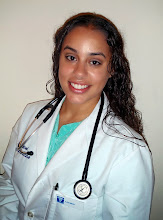
By Gladys M. Yensi
Since the first week of June I have been a leader of a walking group at Mt. Sinai Medical Center. This walking group is part of a larger city-wide initiative: "The 16-Week Walking Challenge." This initiative was developed by Mentoring in Medicine, Inc. and is sponsored by the Amercian Heart and Stroke Association to mobilize the community to get out there and get active. By becoming active in this endeavor, I have not only made an effort to become a little more active than I used to be, but I have also realized the underlying importance of what the walking challenge represents.

Exercise and healthy diet has been shown to prevent and/or alleviate some of the symptoms of cardiovascular diseases, such as heart disease, stroke, and hypertension, as well as diabetes. Other lifestyle changes, like the cessation of a smoking habit, also help to ward off some complications of these diseases. Sadly, quitting smoking and not putting those extra two pinches of Goya® Adobo while cooking, are habits that are difficult to get people to change quickly. Perhaps engaging people to participate in low impact exercise is a habit that could be adapted and maintained more easily, especially when encouraged over 16 weeks. Such has been the challenge this summer.

This walking challenge is pertinent to the fundamental values of the Minority Association of Pre-health Students (MAPS). MAPS at CCNY not only has an affiliation with Mentoring in Medicine through Dr. Lynne Holden, but is also associated with the communities that the walking challenge targets; those in urban settings which are underserved-- Harlem and Washington Heights to name a couple. Not only do some of our MAPS members come from similar communities, but some of us may even be afflicted by diabetes or hypertension, or have family members, friends, and neighbors who struggle with these diseases. All members of MAPS aspire to become health care professionals and combat health disparities as leaders in our communities.

It has been fourteen weeks since I committed myself to leading the Mt. Sinai Medical Center group of the walking challenge. During these recent weeks I have worked with old friends and made new friends. We have enjoyed the scenic views of Central Park during our walks on beautiful summer afternoons, and have shared smiles and laughs as I instructed them in basic belly dance moves. There are only four weeks left of the challenge, but it's never too late to start making walking a habit. Furthermore, at the end of the walking challenge in mid-September, there will be a closing ceremony which will acknowledge the walkers and offer the opportunity for a raffle and giveaways. There will also be a free concert for the walking challenge participants. The details of this event has yet to be announced.

There are six walking groups in total from all five boroughs of New York City. The two most conveniently located near CCNY are those stationed at Harlem Hospital and at Mt. Sinai Medical Center. To learn more, please email WalkwithMIM@gmail.com. I hope to see my fellow MAPS members in the upcoming walks :-)

Tuesday, July 27, 2010

An International Dilemma: Barriers to Sexual and Reproductive Rights

By Alexa Mieses
Picture taken from Nature.com

The New York Times reported today that a vaginal microbicidal gel has given women in one study a 39% chance of protection from the HIV virus. The microbicide contains a nucleotide reverse transcriptase inhibitor, which prevents the virus from reproducing. The study involved a double-blind, randomized controlled trial which compared tenofovir gel (the microbicide) with placebo gel in sexually active, HIV-uninfected 18- to 40-year-old women in urban and rural parts of South Africa. The study involved 30 months of follow-up with each of the women to assess their HIV serostatus, safety, sexual behavior, and gel and condom use. Read the original journal article here.

If such a microbicide is approved, to what extent will African women have access to the vaginal gel? One issue is cost. As the New York Times article mentions, each dose of gel is cheap, however, the patented applicators are rather expensive (forty cents each). Also, men have the authority in most African sexual relationships. While the microbicide may allow an African woman to decrease her chances of contracting HIV without the man's knowledge, will the fact that many physicians are male create a barrier to access of the gel? As of 2006, 70% of all physicians registered with the Health Professions Council of South Africa were male. Will a male dominated world serve as a barrier for African women to obtain the gel? I ask this question because in other countries like Chile and the United States, religious beliefs or political agendas, not whether one is male or female, has created barriers to certain reproductive rights.

The recent history of the emergency contraceptive pill in Chile is more of a flip-flop story of conflicting ideals. In 2006, first female and former Chilean president, Michelle Bachelet, began to more firmly advocate for women's contraceptive rights. By 2007, a presidential mandate made authorities ensure that public health centers made emergency contraception, or the morning-after pill, available. By 2008, courts ruled to only make the pill available in pharmacies and required a prescription. Read more here. Pharmacists would often refuse to sell the pill to women, even with a prescription, sometimes claiming the pill was "out of stock." In reality, religious beliefs instilled in many of the country's people (and pharmacists), often served as the basis for such behavior. Nearly 100 pharmacies were found failing to stock the pill altogether. In early 2010, at the end of her presidency, Bachelet once more was able to sign legislation that allowed the pill to be distributed freely throughout Chile. However, women in Santiago still report a stigma surrounding the purchase of the morning-after pill.

Africa and South America are not the only continents in which access to certain reproductive rights has been an issue. Abortion, while it is a very sensitive subject to some, has been the center of American media and political debate for some time. Since the Supreme Court ruling of Roe v. Wade in 1973, abortion has been legal. However, despite the fact that it is not illegal in many states, there are many barriers that sometimes make it impossible to have an abortion. While most restrictions regarding length of gestation are put in place for good reason, many states create certain restrictions which make it difficult for a woman to undergo an abortion. Also, women with little money or no health insurance often cannot pay for abortions. Additionally, in some places there is limited availability for medical training on abortion. The Association of Reproductive Health Professionals reported that although the Accreditation Council on Graduate Medical Education now requires that training in abortion be made available to all Ob/Gyn residents, as of 2008 only half of Ob/Gyn residency programs offer routine training in abortion care. Finally, violence and harassment of women seeking abortion and/or health care professionals that perform abortions, has created a barrier to the procedure.

As technology develops and new procedures and drugs are created, the political milieu of countries across the globe and women's rights also evolve. Regardless of the moral foundation upon which you stand, it is important to always remain well-informed of scientific developments to better take care of your health.

Tuesday, July 13, 2010

Flashblood: Part of the Cycle

By Alexa Mieses

Today I read a rather disturbing article in the New York Times. Recent reports indicate that in some parts of Africa, intravenous drug users are injecting other addicts' blood in order to get high. This practice has been coined "flashblood." The first thing that popped into my mind was the effect this practice has on the transmission of HIV. While the spread of HIV is dangerous and a serious matter, I could not help but wonder about the socio-econimic factors that may explain why one uses drugs in the first place.

Published in Addiction, a cross-sectional study was conducted in Tanzania with 169 female intravenous drug users. The study found that the women who used flashblood were more likely to live in short-term housing, to have been raped by a family member as a child, to have smoked marijuana at a younger age, and to have contaminated water.

Poverty often has many implications that stretch beyond contaminated drinking water. Poverty is an umbrella for a vicious cycle in which it is hard to determine which comes first. Does a child live in a broken home because he or she is impoverished, or is it difficult to rise out of poverty because he or she lives in a broken home? The answer is both are sometimes true. Perhaps a woman started using heroin because she smoked marijuana at a younger age. Perhaps she smoked marijuana at a younger age to numb the pain of her rape. Perhaps her father raped her because he was drunk. Perhaps her father was an alcoholic because he could not find a job. But why can't he find a job? You can see how the cycle continues.

Even here in Santiago, Chile, where I am spending my summer volunteering with VE Global (VE), the issue of poverty comes up every day. According to the CIA Chilean country-profile, the richest 10% of Chileans possess 41.7% of Chile's wealth, while the poorest 10% possess just 1.6%. The children with whom VE volunteers work often come from poverty and broken homes. Many have been sexually, physically and emotionally abused by their family members, or their families are unable to care for them due to a lack of resources. These children often go on to use drugs and have children at a very young age, thus proliferating the cycle. How can we break this vicious cycle? Even if the work of VE is not the "cure-all" answer, I believe it is a step in the right direction.


Image from www.maryscomfort.org

Monday, June 21, 2010

Greetings from Santiago, Chile!

By Alexa Mieses


The tangerine sun paints streaks of pink in the sky as it sets behind the snow-covered mountains. I am staring out of my window in Santiago, Chile as I write this post! This summer (this winter, if you're Chilean), I am interning with an organization called VE Global (VE). VE is a non-profit organization that works to protect at-risk children in Santiago. VE not only trains and places volunteers for free, but works with eight diverse institutions which include hogares (orphanges), community centers and schools. Additionally, VE also implements various educational programs for the children.

I am lucky enough to see two sides of VE. I spend half of my week in the office, working alongside VE's directors to complete needs analysis work and compose reports for the board of directors, and I spend the other half of my week volunteering as a teacher's assistant at a school for children with special needs called Colegio Anakena. I've only been here for about three weeks and I already feel at home!

Check out another recent blog post on the VE website. More to come from Santiago-- stay tuned!

Thursday, May 6, 2010

Minor Strokes Can Lead to Major Problems

By Mohammad Shamim

According to the National Institute of Health (NIH), three out of ten people never get the medical attention they require while having a mini or minor stroke. If left without proper medical care, these minor strokes become full-on strokes which lead to major health issues such as permanent brain damage. A major stroke occurs when the brain does not properly receive oxygen because of a blocked or ruptured blood vessel. People often do not get the help they require simply because they may not recognize the warning signs.

According to NIH the number of reports by hospitals and primary care doctors, of mini-stroke incidents have increased over the past year. Doctors refer to these strokes as Transient Ischemic Attacks (TIA). Doctors and hospitals all over the world should educate their patients about the symptoms of TIA. In addition, patients should be aware of the signs themselves. According to NIH, the symptoms of TIA are:

-weakness or an inability to move all or part of one side of the body
-feelings of numbness or tingling on one side
-visual disturbances
-trouble speaking and understanding others
-dizziness and fainting

Age and gender do not affect whether or not you are susceptible to TIA. Anyone experiencing symptoms similar to the ones listed above, should contact their physician. The earlier these signs are noticed, the easier it is for one to seek medical attention and possibly prevent a major stroke-- so spread the word!

Wednesday, April 7, 2010

Kaplan online-event coming up...

Hear it straight from those who evaluate the applicants and those who have been successful applicants themselves—what exactly does it take to get into medical school?

Medical school admissions officers, alumni, and students will discuss:

  • The most important medical school admissions factors
  • Strategies for creating a successful medical school application
  • Which medical schools you should apply to
  • Evaluating career options while you're in medical school
Med School Insider Live Online: Tuesday, 5/11 at 7:30 pm ET

Visit the website to register: http://www.kaptest.com/MCAT/Home/med-insider.html
This FREE, anyone can register

Monday, April 5, 2010

SNMA Annual Medical Education Conference 2010


By Alexa Mieses

The Student National Medical Association held its Annual Medical Education Conference (AMEC) this past week in Chicago, IL, entitled Healthy Impact 2010. Among the many well-known speakers was former surgeon general Dr. David Satcher. Dr. Satcher addressed the attendees during his "Healthy People 2010" presentation and touched on everything from health care reform and eliminating health disparities, to increasing the number of minorities in the health professions. In addition, this presentation served as a review of his Healthy People 2010 initiative which was put in place as a deadline by which to make certain permanent changes to the overall health of the American people and reduce health disparities. Though Dr. Satcher did not achieve all of the intended goals, he set a new deadline hoping to make these changes by the year 2020.

Dr. Satcher's large plenary session was not the only highlight of the AMEC pre-medical forum. The forum also included a seminar with Dr. Lynne Holden, MD, of Mentoring in Medicine Inc., on interview and presentation skills, a presentation from Dr. Bonnie Simpson Mason, MD, of Nth Dimensions Educational Solutions, regarding the business side of medicine, and a panel of six physicians at different stages in their lives addressed "Relationships in Medicine". The pre-medical track also included four medical school tours and eight hour-long recruitment fair with over thirty medical schools from across the country in attendance.


CityCollege MAPS Members at Premed Luncheon
Left to Right: Paola Morocho, Felicia Green, Christine Sulmers, Suky Martinez,
Alexa Mieses, Jasmine Cruz, Carlotta Ross

Congratulations Queens College on winning Region XI MAPS Chapter of the Year! CCNY is looking to be next! We're looking forward to seeing everyone next year in Indianapolis!